OEM vs Aftermarket Windshield Glass: Differences, Fit, and Safety Factors
Windshield glass is compared by OEM and aftermarket fit, features, cost drivers, and safety requirements. OEM glass matches the vehicle’s original design, while aftermarket glass can vary by brand, fit, and features. WindshieldRepairKirklandwa.com checks the vehicle, glass specifications, and windshield-mounted ADAS needs before replacement.
Request an EstimateOptions at a Glance
- OEM windshield glass: Best for an exact match to original fit, appearance, and built-in features.
- Aftermarket windshield glass: Best when verified specifications meet the vehicle’s fit, features, and calibration needs.
What’s the Difference Between OEM and Aftermarket Windshield Glass?
OEM windshield glass follows the vehicle manufacturer’s original specifications, while aftermarket glass comes from an independent glass manufacturer and may vary in design or features.
OEM means original equipment manufacturer. The glass is made for the vehicle’s intended shape, markings, sensors, and camera position.
Aftermarket glass is replacement glass made for vehicle compatibility. We check its glass curvature, edge shape, markings, and built-in features before windshield replacement.
OEM and Aftermarket Windshield Glass Compared
OEM and aftermarket glass can both serve a vehicle, but the correct choice depends on fit, built-in features, ADAS requirements, and the vehicle’s use. Our team compares the glass specifications with the vehicle before installation.
| Factor | OEM Glass | Aftermarket Glass | What We Check |
|---|---|---|---|
| Fit | Follows original vehicle specifications. | Can vary by glass manufacturer and product. | Frame contact, curvature, edge shape, and seal fit. |
| Cost drivers | Original brand and vehicle features may affect cost. | Brand, features, and compatibility may affect cost. | Glass type, installation, and calibration requirements. |
| Replacement timeline | Depends on part availability and vehicle needs. | Depends on product availability and specifications. | Part selection, installation, and required calibration. |
| Maintenance | Needs normal cleaning and inspection. | Needs normal cleaning and inspection. | Seal condition, chips, cracks, and sensor function. |
| ADAS compatibility | Designed around the original camera position and features. | Must match the camera view and vehicle requirements. | Camera bracket, optical path, and calibration needs. |
| Vehicle use | Useful when an exact original match matters. | Useful when verified replacement specifications meet the need. | Driving conditions, safety systems, and feature requirements. |
What Are the Advantages of OEM Windshield Glass?
OEM windshield glass offers the closest match to the vehicle’s original glass specifications and features. We use the vehicle details and glass markings to confirm the correct replacement.
Best for: OEM glass is best for vehicles that need an exact match for fit, appearance, glass features, or ADAS placement.
What Are the Advantages of Aftermarket Windshield Glass?
Aftermarket windshield glass can be suitable when its specifications, fit, and required vehicle features match the vehicle. Our team verifies the replacement glass before installation.
Best for: Aftermarket glass is best for vehicles where a verified option meets the required fit, features, and calibration needs.
How Does Windshield Fit Affect Safety?
Windshield fit affects safe bonding, clear vision, structural support, and the correct position of windshield-mounted systems.
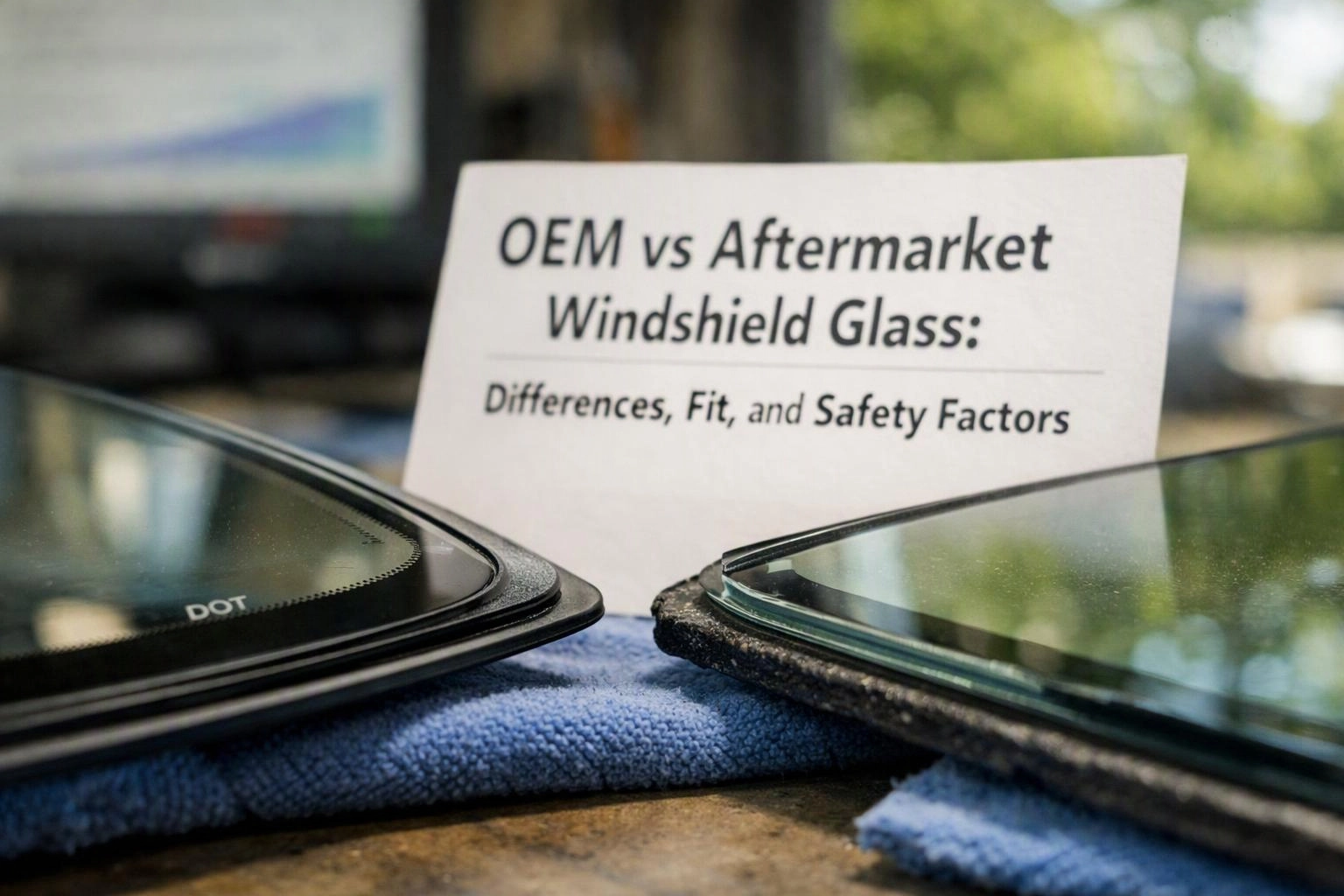
The glass must match the windshield frame and sit correctly along the glass edge. Poor fit can affect seal integrity, bonding, optical clarity, and occupant protection.
We check the frame, glass curvature, seal contact, and optical path during windshield replacement. We also look for distortion that could change the driver’s view or a camera’s view.
When Does Windshield-Mounted ADAS Calibration Matter?
Windshield-mounted ADAS calibration matters when a camera views through the glass and replacement can change its position or optical path.
ADAS may support lane departure warning, forward collision warning, or automatic emergency braking. These systems depend on the camera mounting position and the vehicle calibration requirements.
We check whether the vehicle has a windshield-mounted ADAS camera and whether replacement affects its camera view. When calibration is required, we include that need in the Windshield-Mounted ADAS Camera Calibration process.
How We Check Glass Choice, Fit, and Calibration Needs
Our windshield replacement process starts with vehicle identification and ends with a fit and feature review. We use the vehicle information to match the replacement glass with the safety systems.
We explain the selected glass and installation requirements before work begins. For replacement service, you can use Windshield Replacement to request an exact quote.
What Can Change the Cost of an OEM or Aftermarket Windshield?
The glass specification, vehicle features, installation requirements, and ADAS calibration needs determine the cost of an OEM or aftermarket windshield replacement.
Cost drivers can include the vehicle make and model, glass type, rain sensor, acoustic glass, tinted band, heated windshield, and heads-up display compatibility.
A windshield-mounted ADAS camera can add calibration requirements after installation. We review these details and provide an exact quote based on the selected glass and required work.
Which Windshield Glass Should You Choose?
Choose the glass that matches the vehicle’s required specifications, fits correctly, preserves clear vision, and supports required ADAS calibration.
OEM windshield glass is a strong choice when an exact match matters for fit, appearance, or original features. Aftermarket windshield glass can work when its vehicle compatibility and specifications are verified.
We compare the glass fit, optical clarity, vehicle safety systems, and camera requirements before recommending the replacement option.
Questions About OEM and Aftermarket Windshield Glass
Can aftermarket windshield glass work with an ADAS camera?
Yes, aftermarket windshield glass can work with an ADAS camera when its fit, optical path, camera position, and vehicle requirements match. WindshieldRepairKirklandwa.com checks these details and determines whether calibration is needed.
Does OEM glass improve windshield-mounted camera calibration?
OEM glass can make it easier to match the original camera placement and optical path. Calibration still depends on the vehicle’s requirements, camera position, and installation result.
How can I tell whether a windshield has the right vehicle features?
Windshield features are confirmed through vehicle identification, glass specifications, markings, sensor areas, camera brackets, and the required display or heating functions. We check these details before selecting the replacement glass.
What happens if replacement glass has optical distortion?
Optical distortion can affect clear vision and may change the camera view through the windshield. We inspect the glass and review its fit before completing the installation.
Should a windshield be recalibrated after replacement?
Yes, calibration should be completed when the vehicle’s windshield-mounted ADAS camera requirements call for it. We check the vehicle system and include the required calibration process after windshield replacement.
Choose the Right Glass for Your Vehicle
WindshieldRepairKirklandwa.com checks glass specifications, vehicle features, fit, and ADAS calibration needs before replacement. Request an exact quote that reflects the glass and work your vehicle requires.
Get a Free EstimateRelated Resources
Windshield Repair vs. Replacement: Which Service Does Your Damage Need?
What Goes With ItWindshield Replacement and ADAS Camera Calibration: When Are Both Needed?
When You Need ItWindshield Crack Warning Signs That Mean You Need Replacement
When You Need ItSigns Your Windshield or Auto Glass Seal Is Leaking